Communication between the central nervous system (CNS) and peripheral tissues
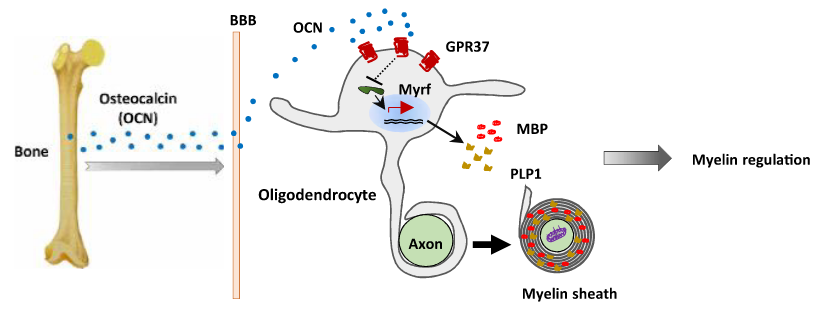
The central nervous system (CNS) dynamically interacts with peripheral tissues through endocrine pathways, a paradigm powerfully exemplified by our discovery of osteocalcin (OCN)—a bone-derived hormone that crosses the blood-brain barrier to directly regulate CNS function. In our work, we identified OCN as a key mediator of bone-brain communication, demonstrating that it binds the GPR37 receptor on neural cells to suppress oligodendrocyte differentiation and myelination via downregulation of myelin gene regulatory factor (Myrf), thereby revealing skeletal tissue as an active orchestrator of neural homeostasis. While OCN’s roles in cognition are established, our findings uncover a fundamental endocrine axis wherein peripheral skeletal activity (e.g., exercise, metabolism) modulates CNS development and plasticity. However, the broader physiological significance of this bone-brain dialogue—how it integrates with signals from other peripheral tissues (e.g., muscle, adipose) to coordinate whole-organism responses—remains an open frontier originating from our research. Elucidating these systemic communication networks is essential to advance therapies for neurological disorders where CNS-peripheral crosstalk is disrupted, ultimately redefining our understanding of inter-organ metabolic integration.